

Industrial Connectivity · IT/OT Integration · Custom Software
I connect industrial equipment and software — and find out why they don't work together.
Need data from a meter, machine or gateway in an app, database or dashboard?
I trace the complete route from the equipment and network to the software. Then I fix the connection or build the missing link.
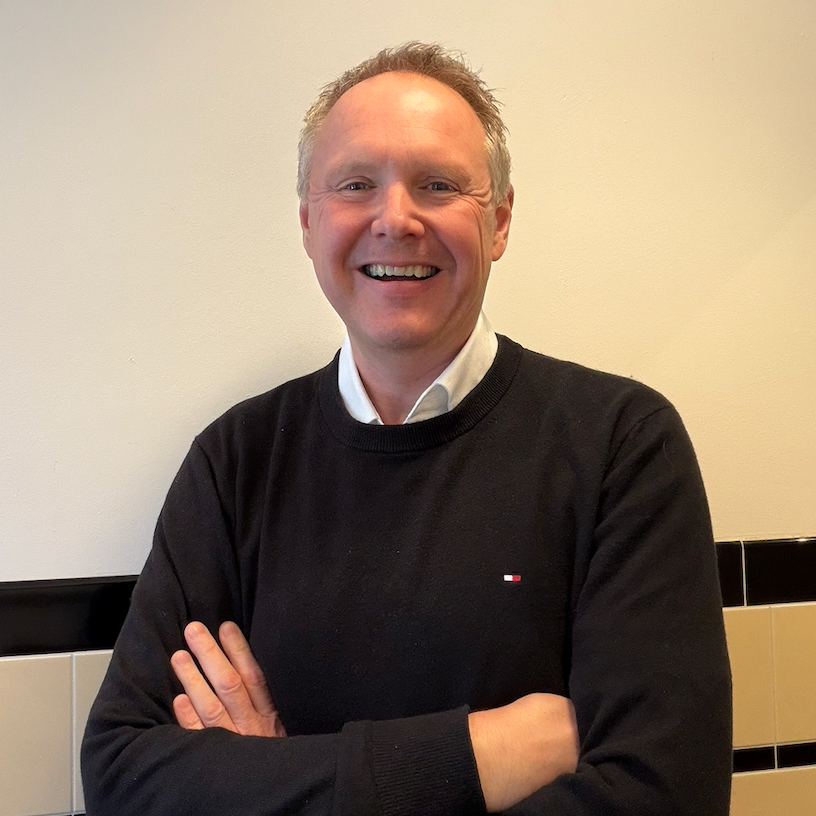
I'm Pieter Leek. My background covers electronics, networks and software, so I can follow a problem across the boundaries where specialists often stop. Qman Nexus focuses on small, clearly scoped integrations, technical troubleshooting and custom software.
One person for the gap between hardware and software.
What I Do
Three things in different forms: connect equipment, find communication faults and build the software in between.
Find the Cause
If data disappears, a connection is unreliable or nobody can explain the fault, I test the chain step by step. That can include wiring, gateway settings, the network, the protocol and the application. You get a clear cause and a practical next step.
Typical: intermittent measurements · gateway time-outs · devices that work separately but not together · faults that disappear before they can be explained.
Connect Equipment to Software
I connect meters, sensors and other equipment to an app, database, dashboard or business system. The technical route may use Modbus RTU/TCP, a serial-to-Ethernet gateway, MQTT or an API, but the goal is simple: get the right data to the right place reliably.
Typical: proving a connection · retrieving data from existing equipment · designing a focused integration · making two systems exchange information reliably.
Make the Connection Safer
I help limit which systems can communicate, set up controlled remote access and improve logging and documentation. For formal audits or plant-wide security programmes, I work with the appropriate specialist disciplines.
Build the Missing Software
When no standard product fits, I build the small piece that is missing: a protocol adapter, API, edge service, data pipeline, backend, dashboard or focused application. The result is documented for the team that takes it forward.
Prove the Idea Works
Before investing in a larger project, I build a working prototype. It proves whether the hardware, connection, data and user interface can work together while the scope is still small.
How an Engagement Works
Start with the problem, not the product. You always know what the next step delivers.
- Short intake. What needs to communicate, what fails now and what has already been tried?
- Focused investigation. I map the relevant chain, reproduce the issue where possible and replace assumptions with evidence.
- Practical proposal. You receive clear options, limitations and a recommended next step.
- Build or repair. Where useful, I implement the connection, software or technical fix.
- Documented handover. The result is explained so your own team can continue with it.
On-site when the hardware, the integration or the situation requires it.
Selected Work
A selection of systems I designed and delivered for clients. Names withheld where agreements require it.
De-icing Control System
Designed and built a control system for de-icing, from sensors and actuators through control logic to the operator interface.
Remote Monitoring for Neonatal Incubators
Designed the chain from incubator to remote monitoring, where a missed reading is not an option: data capture, transport and alerting.
Cashless NFC Payment for a Festival
Built the full system for a festival of about 600 visitors: NFC wristbands, point-of-sale, and a backend in Node.js/TypeScript and Java Spring Boot.
International E-commerce and Supply-Chain Platform
Built the platform and integrations for a company running sales, ERP and manufacturing in China: ERP, factory workflow, a credit-insurance API (Atradius) and a FileMaker backend. Implemented on-site in Chicago.
Current Work & Prototypes
Working prototypes and active development, clearly separated from delivered client work.
WattNu: Modbus Energy Monitoring Prototype
A working end-to-end integration in which a kWh meter communicates over Modbus RS485, a USR-DR302 gateway converts Modbus RTU to Modbus TCP, a Raspberry Pi reads and processes the measurements, and a custom iPhone app presents the energy data.
The prototype is now a practical test environment for reliability, network diagnosis, segmentation and secure access.
Amerta One: Solar-Powered Salinity Monitoring for Rice Fields
A compact field module that measures salinity stress risk in rice fields. Farmers see a simple LED status; the data goes to Tirta Cloud for research, calibration and future advice. The concept combines ESP32/LoRa hardware, solar and LiFePO4 power design, and cloud data for use in Central Java.
Status: prototypes in development, field testing planned in Java. → Visit amerta.one
Multi-User Platform with AI Feedback
Designed and run a platform for 150+ concurrent users: 30 isolated Docker containers behind a Caddy reverse proxy, with a custom Python backend that evaluates user work with AI.
Compliance Feedback Engine
Checks unstructured user input against a formal regulatory framework and returns structured feedback within seconds.
MQTT Relay Bridge
Turns a dashboard command into a physical action: MQTT messages switch hardware relays on analog equipment. A small build, but the same pattern as connecting legacy equipment to a modern control layer.
Writing
How I think about industrial systems, written down.
Designing Defensible Industrial Systems
A target architecture for OT/IT environments that can withstand attack and still be operated. It works through segmentation, OT firewalling, certificate-based device identity and secure telemetry, aligned with IEC 62443, NIS2 and ISA-95. It is architecture research and a design reference, not a claim of a completed plant-wide deployment. A companion video series discusses Zero Trust in OT/IT in English and Dutch.
→ Download the paper (PDF, v1.1)
Notes
Shorter pieces on system boundaries, integration and complexity. → Read the notes
About
Technical breadth, applied to the space between systems.
I've been programming since 1982 and was on the Dutch internet in 1991. I trained in electronics, built software and infrastructure for international clients, and led a software engineering team of 25. Along the way I chaired two boards, through a €450k harbour renewal and a merger of three organisations.
I now apply that broad experience to industrial IT/OT connectivity: understanding how devices, networks, edge systems and applications behave together, and solving the problems that appear at their boundaries.
My industrial portfolio is growing through clearly scoped assignments, working prototypes and documented architecture work. I distinguish what I have delivered from what I am actively developing, and I am clear when formal assurance or another specialist discipline is needed.
The name Qman is a nod to Q from James Bond: the quartermaster who stays out of frontline politics, works from his own lab, and builds exactly the hardware and software needed to survive the mission.
Toolkit
Should two systems communicate—but they don't?
Send a short description of the systems involved, what is going wrong and what has already been tried. I will reply personally and tell you whether Qman Nexus is a good fit.
Connect the systems. Find the fault. Build what is missing.